


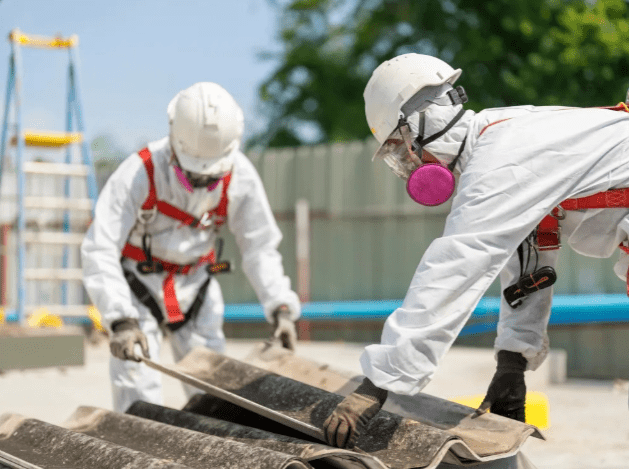
Choosing an asbestos remediation company isn’t like hiring a plumber or a painter. Get the wrong contractor, and you’re not just dealing with shoddy work—you’re dealing with potential health exposure, legal liability, and contamination that could cost tens of thousands of dollars to fix.
The problem is that not all asbestos companies are created equal. Some are fully licensed, insured, and follow every safety protocol to the letter. Others cut corners, skip critical steps, or operate without proper credentials. And from the outside, it’s not always easy to tell the difference.
That’s why asking the right questions is critical. Before you hand over a deposit or sign a contract, you need to verify that the company you’re hiring has the licences, experience, insurance, and reputation to do the job safely and legally.
If you’re unsure about your situation, it’s best to consult professionals for a proper assessment and safe removal. Learn more about our asbestos remediation services.
Here are the 10 essential questions you should ask every asbestos remediation company—and what their answers should tell you.
1. Do You Hold a Valid NSW Asbestos Removal Licence?
This is the first and most important question. In NSW, it is illegal to remove more than 10 square metres of non-friable asbestos or any amount of friable asbestos without a licence issued by SafeWork NSW.
There are two types of licences:
- Class A Licence: Required for removing friable asbestos (material that crumbles easily and releases fibres). Class A licence holders can also remove non-friable asbestos.
- Class B Licence: Required for removing more than 10 square metres of non-friable (bonded) asbestos.
Ask the contractor for their licence number, then verify it on SafeWork NSW’s public register. Don’t take their word for it—check for yourself.
If they don’t have a valid licence, or if they tell you licensing isn’t necessary for “small jobs,” walk away immediately. Using an unlicensed contractor is illegal, and you—the property owner—can be held liable for any contamination, exposure, or improper disposal that results.
2. Can You Provide Proof of Insurance?
Asbestos remediation is high-risk work. Accidents happen, contamination spreads, and people get exposed. If something goes wrong, you need to know you’re covered.
Every reputable asbestos remediation company should carry:
Public Liability Insurance
This protects you if the contractor’s work causes damage to your property, a neighbouring property, or results in third-party injury.
Workers’ Compensation Insurance
This covers the contractor’s employees if they’re injured on the job. Without it, you could be held liable for workplace injuries that occur on your property.
Ask for copies of current insurance certificates—not just verbal assurance that they’re insured. Verify that the policies are active and that the coverage amounts are adequate for the scope of work.
If a contractor can’t or won’t provide proof of insurance, that’s a red flag. It suggests they’re either uninsured (which is illegal for licensed contractors) or they’re not operating above board.
3. Are You ISO-Certified for Safety and Quality Management?
ISO certification isn’t legally required, but it’s a strong indicator that a company takes safety and quality seriously.
ISO 45001 (occupational health and safety management) and ISO 9001 (quality management) are internationally recognised standards that require companies to:
- Implement documented safety procedures
- Conduct regular internal audits
- Continuously improve their processes
- Maintain traceable records of all work
Companies that hold ISO certifications are regularly audited by independent third parties to ensure compliance. This means their systems are transparent, their processes are consistent, and their work meets rigorous standards.
While not every good contractor is ISO-certified, it’s a strong signal of professionalism and accountability—and it’s something you should prioritise when comparing companies.
4. How Do You Handle Air Monitoring and Clearance Testing?
This is where you separate legitimate contractors from those who cut corners.
After asbestos removal, the work area should be tested by an independent third party to confirm that fibre concentrations are below safe exposure limits. This is called clearance testing, and it’s not optional—it’s the only way to verify that the site is safe for reoccupation.
Here’s the critical part: the clearance testing must be done by someone other than the contractor who performed the removal. This ensures objectivity and prevents conflicts of interest.
Ask the contractor:
- Do they include independent clearance testing in their quote?
- Who conducts the testing, and are they licensed?
- What happens if the site doesn’t pass clearance on the first attempt?
If a contractor tells you that clearance testing isn’t necessary, or that they’ll do it themselves, that’s a major red flag. Proper air monitoring is a regulatory requirement and a safety necessity—any contractor who dismisses it doesn’t have your best interests in mind.
5. What’s Your Process for Containment and Waste Disposal?
A professional asbestos remediation company should be able to walk you through their containment and disposal procedures in detail.
Containment prevents asbestos fibres from spreading beyond the work zone. This typically involves:
- Physical barriers and signage
- Negative air pressure systems for indoor work
- HEPA filtration units
- Decontamination stations for workers
Waste Disposal ensures that removed asbestos is transported and disposed of legally. This means:
- Double-bagging materials in heavy-duty polyethylene
- Labelling waste with hazard warnings
- Transporting waste in sealed containers
- Delivering waste to a licensed disposal facility
Ask the contractor:
- What containment measures do they use?
- Where will the asbestos be disposed of?
- Will they provide disposal receipts from the licensed facility?
If their answers are vague or they can’t provide specific details, that suggests they either don’t have a proper process or they’re not following it.
You can also read our guide on risk management during road closures for civil construction projects.
6. Can You Provide References and Examples of Past Work?
Any established asbestos remediation company should have a portfolio of completed projects and references you can contact.
Ask for:
- Case studies or project examples similar to your situation
- References from past clients (ideally recent ones)
- Clearance certificates and documentation from previous jobs
Then actually follow up. Call the references. Ask about their experience with the contractor:
- Did the work stay on schedule and on budget?
- Were there any issues with contamination or compliance?
- Did the contractor communicate clearly throughout the process?
- Would they hire them again?
If a contractor can’t or won’t provide references, or if the references don’t check out, move on to someone who can demonstrate a track record of successful, compliant work.
7. What’s Included in Your Quote—and What’s Not?
Asbestos remediation quotes can vary significantly, and sometimes that’s because contractors are including different things.
A comprehensive quote should specify:
- Inspection and testing (if applicable)
- Removal work (square meterage, type of asbestos, location)
- Containment setup and decontamination
- Waste transport and disposal fees
- Air monitoring and clearance testing
- Site cleanup
- Documentation (clearance certificates, disposal receipts, photographic evidence)
It should also clarify:
- The payment schedule (deposit, progress payments, final payment)
- The estimated timeline
- What happens if unexpected asbestos is discovered during the work
If a quote seems unusually low compared to others, dig into what’s excluded. You might find that clearance testing, disposal fees, or air monitoring aren’t included—and those costs will hit you later as “extras.”
8. How Long Have You Been Operating, and What’s Your Experience with Projects Like Mine?
Experience matters in asbestos remediation. The industry has been around since the late 1980s, and the best contractors have decades of experience dealing with everything from simple roof removals to complex industrial site remediation.
Ask about:
- How long the company has been in business
- The experience level of their supervisors and removal personnel
- Whether they’ve handled projects similar to yours (residential vs commercial, friable vs non-friable, indoor vs outdoor)
Established companies with experienced teams are more likely to anticipate complications, adapt to site-specific challenges, and deliver work that meets regulatory standards the first time.
If you’re dealing with a more complex scenario—like soil contamination, loose-fill insulation, or large-scale commercial remediation—prioritise contractors who have specific experience in that area.
9. Do You Follow NSW Regulations and SafeWork NSW Guidelines?
This should be a given, but it’s worth asking directly.
A professional asbestos remediation company should be familiar with:
- The Protection of the Environment Operations Act
- The Contaminated Land Management Act
- SafeWork NSW’s Code of Practice for asbestos work
- State Environmental Planning Policy (Resilience and Hazards)
They should also be registered with SafeWork NSW, maintain updated asbestos removal plans for each job, and follow documented procedures that comply with current regulations.
If a contractor seems unfamiliar with NSW regulations, or if they suggest shortcuts that don’t align with SafeWork requirements, that’s a sign they’re not operating at the level you need.
10. What Happens If Something Goes Wrong?
No contractor wants to admit that things might go wrong, but the reality is that asbestos remediation is unpredictable. Materials might be more damaged than expected. Contamination might extend beyond the initial assessment. Clearance testing might fail on the first attempt.
Ask the contractor:
- What happens if the site doesn’t pass clearance?
- Who pays for re-cleaning and retesting?
- What’s your process for handling unexpected contamination?
- How do you manage delays or complications?
A good contractor will have clear protocols for handling these situations and will take responsibility for getting the site to pass clearance—even if it requires additional work at their expense.
If a contractor deflects this question or tries to shift all the risk onto you, that’s a warning sign. You want someone who stands behind their work and takes accountability when issues arise.
Red Flags That Should Make You Walk Away
In addition to asking the right questions, watch out for these warning signs:
- No valid licence or insurance: Non-negotiable deal-breaker.
- Unusually low quotes: If it’s half the price of everyone else, there’s a reason—and it’s not good.
- Pressure to sign immediately: Legitimate contractors don’t need to pressure you.
- Vague or evasive answers: If they can’t explain their process clearly, they either don’t have one or they’re hiding something.
- No written contract: Always get everything in writing.
- Unwillingness to provide references: Established contractors have a track record they’re happy to share.
What WBS Engineers Brings to the Table
At WBS Engineers, we hold full Class A and Class B asbestos removal licences, and we operate under ISO-certified safety and quality management systems. We carry comprehensive public liability and workers’ compensation insurance, and we work with independent assessors to ensure every project passes clearance the first time.
We’ve been in the asbestos remediation business across NSW for years, handling everything from small residential removals to large-scale commercial and industrial projects. Our teams include supervisors and removal personnel with decades of industry experience between them, and we follow SafeWork NSW regulations to the letter.
What sets us apart is our commitment to transparency and client education. We don’t just quote a price and show up with equipment—we take time to explain the process, answer your questions, walk you through what will happen at each stage, and provide detailed documentation throughout. We understand that for most property owners, asbestos remediation is unfamiliar territory, and we believe part of our job is to demystify the process and give you confidence that you’re making informed decisions.
When you hire WBS Engineers, you get:
- Transparent quotes with no hidden fees or surprise charges
- Documented processes from assessment to clearance
- ISO-certified safety protocols on every project, regardless of size
- Independent air monitoring and clearance testing by third-party assessors
- Full compliance with NSW regulations and SafeWork NSW requirements
- Clear communication at every stage—you’re never left wondering what’s happening
- Comprehensive documentation including clearance certificates, disposal receipts, and photographic evidence
We’ve built our reputation on doing things right the first time, and we stand behind our work. If a site doesn’t pass clearance, we re-clean and retest at our expense until it does. We don’t cut corners, we don’t take shortcuts, and we don’t leave until the job is done right and you have the documentation to prove it.
Why Hiring a Licensed Asbestos Remediation Company Matters
Hiring a licensed asbestos remediation company is essential for protecting both public health and the environment. In NSW, strict regulations govern how asbestos must be handled, removed, transported, and disposed of.
Licensed contractors follow SafeWork NSW guidelines, use specialised containment equipment, and ensure that contaminated materials are safely transported to approved disposal facilities. They also coordinate independent air monitoring and clearance testing to confirm that the site is safe for reoccupation.
Choosing a qualified contractor not only protects workers and occupants but also ensures that property owners remain compliant with NSW environmental and safety regulations.
The Bottom Line
Choosing an asbestos remediation company isn’t just about price—it’s about trust, competence, and accountability. The contractor you hire is responsible for protecting your health, your property, and your legal standing. That’s not something to take lightly.
Ask the right questions. Verify credentials. Check references. And choose a company that has the licences, insurance, experience, and reputation to do the job properly.
Your health and your property are worth it.
If you’re planning a construction project, our civil works contractor services in NSW can help manage complex infrastructure and remediation projects.



Pingback: 5 Warning Signs of an Unreliable Asbestos Remediation Company (NSW Guide)
Pingback: 8 Signs You Need Asbestos Remediation in NSW | WBS Engineers