
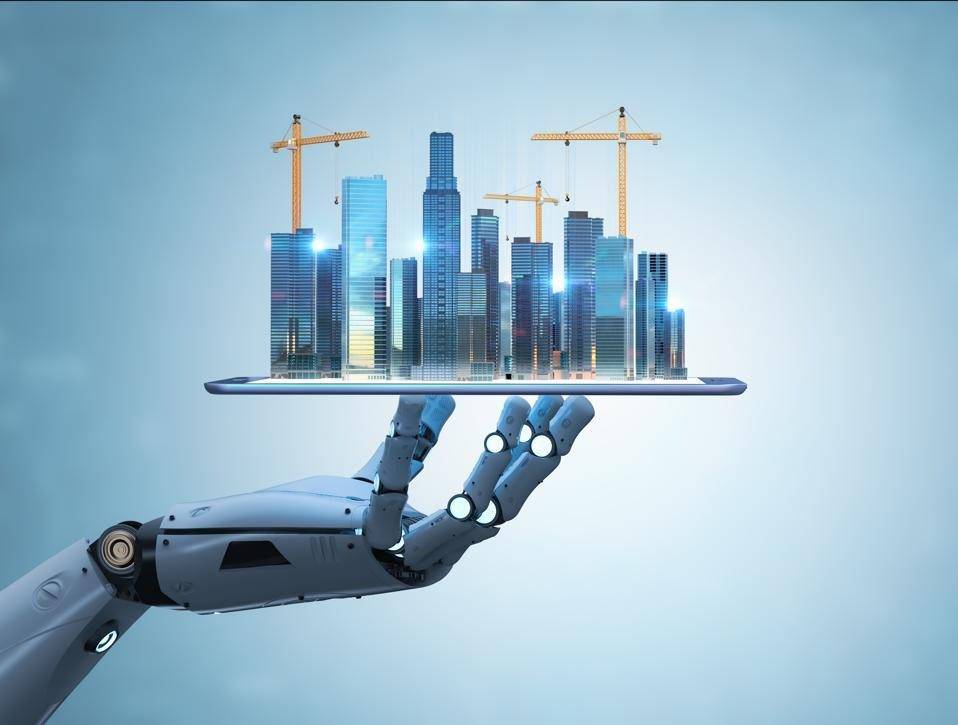
Artificial Intelligence (AI) is no longer a futuristic concept — it’s a working partner on today’s construction sites. From planning and safety monitoring to predictive maintenance and sustainability tracking, AI is transforming how engineers, contractors, and consultants deliver infrastructure across New South Wales.
At WBS Engineers, we integrate AI-driven insights into every stage of the project lifecycle — supporting smarter decisions, safer worksites, and more efficient outcomes.
The Rise of AI in the Construction Industry
The NSW construction sector faces a unique mix of challenges — tight schedules, complex compliance requirements, and rising sustainability expectations. AI provides the tools to address these challenges by analysing data faster and more accurately than manual systems ever could.
Key benefits of AI integration include:
- Improved accuracy in planning and design coordination
- Real-time safety monitoring and risk detection
- Faster project delivery through predictive scheduling
- Lower environmental impact via material optimisation
Simply put, AI doesn’t replace engineering expertise — it strengthens it.
Where AI is Transforming Construction
1. Predictive Project Planning
AI algorithms analyse historical data and real-time inputs to forecast potential delays, budget risks, or equipment failures.
For example, in civil infrastructure projects, AI can identify scheduling bottlenecks or resource clashes before they occur — keeping construction on track and within budget.
At WBS Engineers, we integrate predictive modelling tools to refine project plans, ensuring early risk detection and more accurate delivery timelines.
2. Site Safety and Compliance
Worksite safety is one of the biggest concerns in the construction industry. AI-powered cameras and sensors can monitor worker behaviour, machinery zones, and PPE usage — automatically flagging safety breaches.
In asbestos remediation, AI systems can also assist in tracking airborne particle readings and environmental data, supporting compliance with NSW Safework and EPA regulations.
Safety isn’t just a process — it’s a continuous feedback loop powered by real-time intelligence.
3. Design Optimisation and BIM Integration
AI enhances Building Information Modelling (BIM) by automating design checks and detecting clashes in complex engineering drawings.
It can also simulate construction sequences, helping engineers visualise project stages and avoid design-related rework.
For telecommunications infrastructure, this means precise tower and trench placement — ensuring optimal connectivity and minimal disruption to surrounding utilities.
4. Equipment and Asset Management
Machine learning models are now used to predict when equipment will need servicing or replacement.
This not only reduces downtime but also improves safety and cost efficiency.
WBS Engineers uses similar predictive systems to manage heavy machinery across civil and remediation projects, ensuring reliability and compliance with operational standards.
5. Sustainability and Environmental Monitoring
AI contributes to sustainability engineering by helping teams track emissions, energy use, and waste generation in real time.
It supports greener decision-making through:
- Automated waste sorting and recycling tracking
- Emission reduction analytics
- Energy-efficient scheduling and logistics
In NSW, where environmental performance is central to infrastructure delivery, these tools align directly with government sustainability targets.
Integrating AI into WBS Engineers’ Workflows
At WBS Engineers, technology supports—not replaces—our engineering expertise.
AI complements our ISO-certified systems in quality, environment, and safety, providing:
- Smarter project planning and reporting
- Faster risk identification during remediation and civil works
- Real-time insights for safer, cleaner worksites
Our engineers combine decades of field experience with the latest AI-powered solutions to ensure each project is data-informed, compliant, and future-ready.
AI in Action: NSW Infrastructure Applications
AI is already being applied across projects that WBS Engineers specialises in:
- Civil Works: AI-supported scheduling reduces delays in excavation, drainage, and pavement construction.
- Remediation Projects: AI-based air monitoring ensures asbestos removal meets strict EPA safety limits.
- Telecommunications Infrastructure: Drones and computer vision map and analyse tower sites with millimetre-level precision.
These applications demonstrate how technology and engineering can work hand-in-hand to improve performance and reliability.
Challenges and the Future of AI in Construction
While AI adoption is accelerating, the biggest barrier is data quality and integration. For AI to deliver accurate insights, consistent data collection across all project stages is essential.
The future, however, is promising.
AI will soon enhance sustainability tracking, automate compliance documentation, and integrate digital twins — creating virtual models that evolve with real-world projects.
For firms like WBS Engineers, this future is already unfolding.
Why Choose WBS Engineers for AI-Enabled Construction
- Integration of AI tools in civil, telecom, and remediation projects
- Class A licensed asbestos remediation specialists
- ISO-certified systems across quality, safety, and environment
- Proven record in sustainable and digital engineering solutions
- Transparent, real-time project reporting through digital platforms
Our team blends human expertise with AI intelligence — delivering infrastructure that’s efficient, compliant, and built to last.
Frequently Asked Questions (FAQ)
Q1: How is AI used in construction?
AI supports planning, safety monitoring, predictive maintenance, and sustainability tracking through data analysis and automation.
Q2: What benefits does AI bring to WBS Engineers’ projects?
It improves accuracy, reduces delays, enhances safety, and supports environmental compliance across all projects.
Q3: Is AI applicable to small projects or only large-scale ones?
AI tools can scale — from small remediation sites to major infrastructure builds.
Q4: How does AI contribute to sustainability?
By optimising resource use, tracking emissions, and supporting low-impact construction methods.
Q5: Can AI replace human project managers?
No — AI supports decision-making but relies on engineers’ expertise for interpretation and action.

 contact@wbsnsw.com.au