

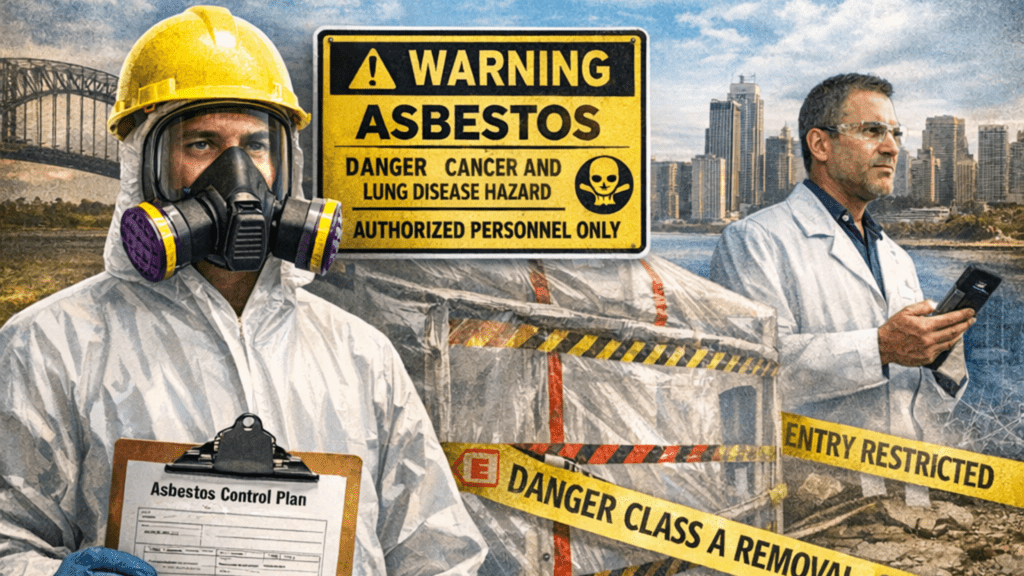
Getting caught on the wrong side of NSW asbestos regulations isn’t just embarrassing—it can shut down your entire operation. We’ve watched contractors lose their licenses, face six-figure fines, and deal with legal battles that dragged on for years. All because they didn’t take asbestos compliance seriously enough from the start.
At WBS Engineers, we work with builders and project managers who are navigating these regulations for the first time, and the questions are always similar: “What exactly do I need to do? How much documentation is required? Can I speed this up?” The answers aren’t always what people want to hear, but understanding asbestos compliance upfront saves massive headaches down the road.
Understanding Safe Work NSW Asbestos Requirements
SafeWork NSW doesn’t leave much room for interpretation when it comes to asbestos work. The regulations are detailed, specific, and actively enforced. Inspectors show up unannounced, they know exactly what to look for, and they have zero tolerance for shortcuts.
Before any asbestos remediation work begins in NSW, you need proper notification. For licensed asbestos removal work, this means lodging a notification at least five days before starting. Not four days. Not “we’ll get to it.” Five full days minimum. Rush jobs don’t exempt you from this requirement.
The notification includes detailed information about the work location, the type and amount of asbestos being removed, your licensed asbestos removal company details, and the expected timeline. Miss any of these details and your notification gets rejected. Start work without proper notification and you’re looking at immediate stop-work orders and penalties.
As a professional asbestos company with Class A licensing, WBS Engineers handles all notification requirements as part of our service. We’ve submitted hundreds of these notifications and know exactly what SafeWork NSW expects. But if you’re managing the process yourself, triple-check everything before submission.
Asbestos Licensing NSW: More Than Just Paperwork
There’s a common misconception that asbestos licensing in NSW is just about filling out forms and paying fees. That’s like saying a pilot’s license is just about passing a written test. The reality involves extensive training, demonstrated competency, and ongoing compliance with strict standards.
NSW has two main categories of asbestos removal licenses: Class A and Class B. Understanding which one you need—or which one your contractor holds—makes a huge difference to what work can legally be performed.
A Class B licence allows removal of non-friable asbestos up to 10 square meters. That’s adequate for small residential jobs or minor commercial work. But here’s what catches people: that 10 square meter limit applies to the total amount removed over seven days, not per job. Try to do multiple small jobs in one week and you might exceed your license scope without realizing it.
Class A licensing—what WBS Engineers maintains—covers all asbestos removal work without restrictions. Friable asbestos, non-friable asbestos, any quantity, any location. This licensing requires more rigorous training and higher insurance coverage, but it means we can handle whatever your project throws at us.
When hiring an asbestos contractor in NSW, always verify their license class matches your project needs. SafeWork NSW maintains a public register where you can check current licenses. If a contractor hesitates when you ask about their license details, that’s a massive red flag.
The Real Requirements for Asbestos Safety Management
Asbestos safety management in NSW goes way beyond just removing the material carefully. It’s a comprehensive system covering risk assessment, worker protection, environmental controls, and emergency procedures.
Every asbestos removal project requires a written asbestos removal control plan. This isn’t a generic template you download and fill in your company name. It’s a detailed, site-specific document outlining exactly how the work will be performed, what hazards exist, and how risks will be controlled.
The control plan includes air monitoring procedures, decontamination protocols, waste disposal methods, and emergency response plans. It identifies who’s responsible for what, what personal protective equipment is required, and how the site will be secured to prevent unauthorized access.
At WBS Engineers, our asbestos safety management systems are built around ISO 45001 standards. This means every project follows the same rigorous approach regardless of size or complexity. Our team receives regular training updates, and we maintain detailed records of all safety procedures and incidents.
For project managers overseeing asbestos work, you need to verify your contractor has a proper safety management system in place. Ask to see their control plan before work starts. If they can’t produce one or it looks generic and incomplete, find another contractor.
HEPA Filtration Equipment and Air Monitoring Standards
One area where we see contractors cutting corners is air quality management. NSW regulations require negative air pressure and HEPA filtration equipment for licensed asbestos removal work, but some operators use substandard equipment or skip air monitoring entirely.
HEPA filtration equipment must meet specific performance standards—removing 99.97% of particles 0.3 microns or larger. Asbestos fibers are typically 0.7 to 90 microns, so proper HEPA filtration captures them effectively. But cheap equipment or poorly maintained filters don’t meet these standards, creating serious exposure risks.
Air monitoring happens at multiple points throughout asbestos remediation projects. Background monitoring establishes baseline conditions before work starts. Personal monitoring tracks exposure levels for workers inside the containment area. Clearance monitoring confirms the area is safe after removal is complete.
All this monitoring must be performed by independent, accredited laboratories using approved methods. You can’t just wave a meter around and call it good. The testing follows strict protocols, and results get documented in detailed reports.
WBS Engineers uses commercial-grade HEPA filtration systems on every project, and we work with certified hygienists for all air monitoring requirements. This isn’t optional equipment we bring out for big jobs—it’s standard procedure for everything we do.
Independent Clearance Testing: Why It’s Non-Negotiable
After asbestos removal is complete, someone needs to verify the area is actually safe. That’s where independent clearance testing comes in, and it’s one of the most important steps in the entire process.
“Independent” is the key word here. The same company that performed the asbestos remediation cannot certify their own work. That would be like a restaurant inspecting its own kitchen—the conflict of interest is obvious. NSW regulations require clearance testing by licensed asbestos assessors who are independent from the removal company.
The clearance process involves visual inspection of all surfaces, air monitoring to detect any residual fibers, and sometimes surface sampling in critical areas. The assessor is looking for any signs of remaining contamination, improper cleanup, or areas that need additional attention.
Only when the independent assessor issues a clearance certificate can the area be reoccupied or construction work resume. No clearance certificate means the area remains off-limits, regardless of what the removal contractor says about their cleanup job.
We’ve seen projects where contractors claimed the work was done, the area was clean, and clearance testing was just a formality. Then the independent testing found contamination and the entire area had to be cleaned again. This delays the project and adds significant costs—all preventable by doing the work properly the first time.
At WBS Engineers, we don’t consider a job complete until independent clearance testing confirms it. We build this into our timeline and budget from the start, so clients know exactly what to expect.
Asbestos Company Insurance: Protection You Can’t Skip
Let’s talk about something most people don’t think about until it’s too late: asbestos company insurance. The risks involved in asbestos work are substantial, and if something goes wrong, you need to know your contractor can cover the consequences.
NSW requires licensed asbestos removalists to carry specific insurance coverage. This includes public liability insurance (minimum $20 million for Class A license holders), workers compensation for all employees, and professional indemnity coverage. These aren’t suggestions—they’re legal requirements for maintaining an asbestos removal license.
But minimum coverage isn’t always adequate coverage. At WBS Engineers, we carry insurance well above the minimum requirements because we understand the potential liability involved. If contamination spreads beyond the work area, if someone develops health issues later, if there’s property damage during removal—proper insurance coverage protects everyone involved.
Before hiring any professional asbestos company, request current certificates of currency for all insurance policies. Verify the coverage amounts are appropriate for your project value and scope. Make sure the policy periods cover your project timeline. And check that the certificates are actually from insurance companies, not just something printed on company letterhead.
We’ve heard stories about contractors operating with expired insurance or coverage levels that wouldn’t come close to covering a serious incident. When you’re the property owner or project manager, that liability exposure falls back on you if your contractor can’t cover it.
Quality Asbestos Remediation: What Sets Professionals Apart
Anyone with a Class A or Class B licence can technically perform asbestos removal in NSW. But there’s a massive gap between meeting minimum legal requirements and delivering quality asbestos remediation that protects everyone involved.
Professional asbestos removal companies invest in proper equipment, ongoing training, and comprehensive safety systems. They maintain detailed documentation, follow established protocols, and treat every project with the same level of care regardless of size.
ISO 9001 certification for quality management systems separates serious operators from bare-minimum contractors. This certification requires documented processes, regular audits, and continuous improvement programs. It ensures consistency across all projects and accountability at every level.
At WBS Engineers, our ISO 9001 asbestos quality management system means you get the same high standard whether you’re hiring us for a small office renovation or a major infrastructure project. Our teams follow identical procedures, use the same equipment standards, and maintain the same documentation practices.
When evaluating asbestos contractors, ask about their quality management systems. How do they ensure consistency between different crews? What training do workers receive? How do they handle non-conformances or issues that arise during work? Companies with proper quality systems can answer these questions clearly and provide documentation to back it up.
Documentation Requirements That Keep You Compliant
NSW asbestos regulations involve mountains of paperwork, and every document serves a purpose. Incomplete or missing documentation can cause compliance issues even if the actual removal work was performed safely.
Before work begins, you need an asbestos register identifying all asbestos-containing materials on site. This comes from proper assessment and testing, not assumptions. The register informs the asbestos removal control plan, which details how the work will proceed.
During work, daily logs track what was removed, air monitoring results, any incidents or issues, and waste disposal documentation. Photos provide visual records of conditions before, during, and after removal. All this gets compiled into a comprehensive project file.
After work completes, you need the independent clearance certificate, final waste disposal receipts showing the asbestos went to licensed facilities, and a clearance inspection report. These documents prove compliance and protect you from future liability.
WBS Engineers maintains detailed documentation for every project we handle. We provide clients with complete records packages including all required certificates, test results, and disposal documentation. This protects both us and our clients by demonstrating full compliance with NSW regulations.
For property owners, keeping these records is critical. Future buyers, tenants, or contractors need to know what asbestos work was performed and how it was handled. Proper documentation adds value by showing due diligence and reducing uncertainty.
Common Compliance Mistakes That Cost Projects
Even experienced contractors sometimes make compliance mistakes that create serious problems. Understanding these common pitfalls helps you avoid them on your own projects.
Starting work before the required five-day notification period expires is probably the most common violation we see. Someone discovers asbestos, calls a contractor, and wants it gone immediately. But SafeWork NSW doesn’t care about your timeline—the notification period exists for good reasons and isn’t negotiable.
Using contractors without proper licensing is another frequent issue, especially on residential projects. Homeowners see the cost difference between licensed and unlicensed workers and choose to save money. Then they get caught during inspections, face fines, and have to pay for the work to be redone properly anyway.
Inadequate containment causes contamination beyond the work area, creating much larger cleanup requirements. We’ve been called to sites where initial contractors set up minimal containment, fibers spread to adjacent areas, and now the whole building needs remediation instead of just one section.
Improper waste disposal—trying to sneak asbestos into regular construction waste or taking it to unlicensed facilities—results in severe penalties. NSW tracks asbestos waste carefully, and getting caught with improper disposal can result in criminal charges, not just fines.
At WBS Engineers, we’ve built our procedures specifically to avoid these common mistakes. Our experienced asbestos contractor teams know where problems typically arise and take extra precautions in those areas.
The Bottom Line on NSW Asbestos Compliance
Asbestos compliance in NSW is complex, strictly regulated, and non-negotiable. But it’s also completely manageable when you work with certified asbestos company professionals who understand the requirements and have systems in place to meet them consistently.
The key is treating compliance as an integral part of the project, not an afterthought or obstacle to work around. Build it into your planning, budget adequate time and money, and choose contractors based on their compliance record and capabilities, not just price.
WBS Engineers has built our reputation on delivering quality asbestos remediation while maintaining strict compliance with all NSW regulations. Our Class A asbestos licensing, ISO certifications, comprehensive insurance coverage, and experienced teams mean clients can trust their projects are handled properly.
If you’re facing asbestos compliance requirements on your NSW project and need guidance, we’re happy to help. Sometimes a conversation early in the planning process prevents compliance issues that would cost ten times more to fix later.
Frequently Asked Questions (FAQs)
What are the asbestos compliance requirements in NSW?
In NSW, asbestos compliance requires proper identification, notification to SafeWork NSW, licensed removal, controlled work methods, air monitoring, independent clearance testing, and lawful waste disposal. Licensed asbestos removal work must be notified to SafeWork NSW at least five days before work begins.
2. Do I need a licence to remove asbestos in NSW?
Yes. Any asbestos removal work beyond very minor tasks requires a licence.
- Class B licence: For non-friable asbestos up to 10m² within a 7-day period
- Class A licence: Required for all friable asbestos and unlimited quantities
Only licensed contractors can legally perform asbestos removal in NSW.
3. What is the 5-day SafeWork NSW asbestos notification rule?
SafeWork NSW mandates that licensed asbestos removal work must be formally notified a minimum of five full days before commencement. Starting work earlier can result in stop-work orders, fines, or licence suspension.
4. Can asbestos work start without SafeWork NSW approval?
No. Work cannot begin without proper notification and acknowledgment. Failure to notify SafeWork NSW is a serious compliance breach and may lead to enforcement action, penalties, and project delays.
5. What is an asbestos removal control plan?
An asbestos removal control plan is a site-specific document outlining how asbestos will be safely removed. It includes risk assessments, containment methods, PPE requirements, air monitoring procedures, decontamination processes, emergency plans, and waste disposal methods.
6. Is air monitoring mandatory during asbestos removal?
Yes. Licensed asbestos removal in NSW requires air monitoring conducted by independent, accredited hygienists. This includes background monitoring, personal exposure monitoring, and clearance monitoring after work is completed.
7. What is independent asbestos clearance testing?
Independent clearance testing is performed by a licensed asbestos assessor who did not carry out the removal work. It confirms that the area is safe for reoccupation and must be completed before any construction or occupancy resumes.
8. Can the asbestos removal company issue its own clearance certificate?
No. NSW regulations strictly prohibit asbestos removal companies from certifying their own work. Clearance certificates must be issued by an independent, licensed assessor.
9. What happens if asbestos is disposed of incorrectly?
Improper asbestos disposal is a serious offence in NSW. Penalties can include heavy fines, criminal charges, and environmental cleanup costs. Asbestos waste must be transported and disposed of at licensed facilities with full documentation.
10. What insurance should an asbestos removal company have?
Licensed asbestos removalists must carry:
- Public liability insurance (minimum $20 million for Class A)
- Workers compensation insurance
- Professional indemnity insurance
Working with uninsured or underinsured contractors exposes builders and property owners to significant legal risk.
11. How can builders ensure asbestos compliance on their projects?
Builders should:
- Engage a Class A licensed asbestos contractor when required
- Verify licences and insurance