

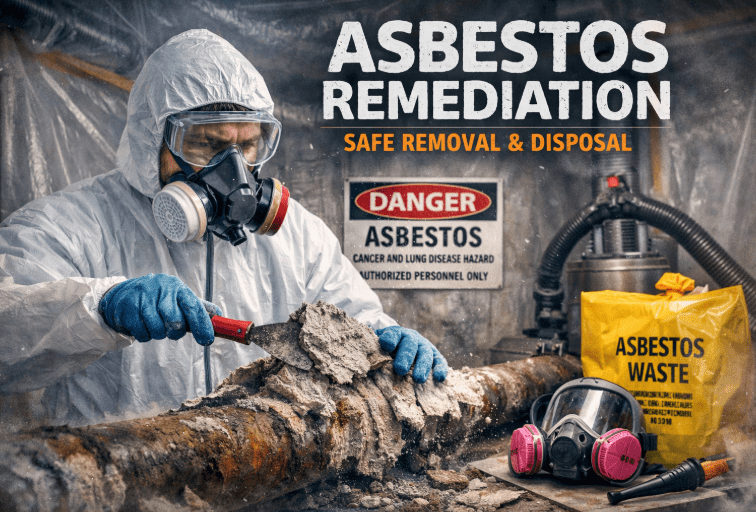
Every week, we get calls from builders and project managers across Sydney who’ve just discovered asbestos on their site. The conversation usually starts the same way: “We found some suspicious materials, but we’re already behind schedule. Can we work around it?” The short answer? No. And trying to do so might be the most expensive mistake you’ll make on that project.
Asbestos remediation in NSW isn’t just a regulatory checkbox—it’s a fundamental safety requirement that affects everything from your project timeline to your legal liability. After handling asbestos removal across hundreds of construction sites in Sydney, we’ve seen what happens when companies try to cut corners, and it’s never pretty.
If you’re unsure about your situation, it’s best to consult professionals for a proper assessment and safe removal. Learn more about our asbestos remediation services.
What NSW Regulations Actually Require for Asbestos Removal
Let’s start with what the law says, because there’s a lot of confusion out there. NSW has some of the strictest asbestos regulations in Australia, and SafeWork NSW doesn’t mess around when it comes to enforcement.
Any commercial or industrial asbestos removal work in NSW requires a licensed asbestos removalist. Not someone who “knows what they’re doing” or “has done it before”—an actual licensed professional with current credentials. For residential properties, homeowners can remove up to 10 square meters of non-friable asbestos themselves, but honestly? Most people shouldn’t. The health risks aren’t worth the money you might save.
WBS Engineers operates under a Class A asbestos removal license, which means we can handle any asbestos situation—friable, non-friable, large-scale commercial jobs, or complex demolition projects. This licensing isn’t automatic. It requires extensive training, ongoing education, and regular audits to maintain. When you’re hiring an asbestos removal contractor in NSW, verify their license is current and matches the scope of your project.
The Hidden Costs of Asbestos Discovery
Here’s something most project managers don’t factor into their budgets: asbestos discovery doesn’t just add the cost of removal. It creates a cascade of expenses that can derail your entire financial planning.
First, there’s the testing. Before any asbestos remediation work begins, you need proper identification and assessment. That’s laboratory testing, site surveys, and detailed reports. Then comes the actual removal, which involves specialized equipment, containment systems, and disposal fees at licensed facilities.
But the real cost? Project delays. Once asbestos is confirmed on site, all work in affected areas stops immediately. Your crew sits idle. Your equipment rental fees keep running. Your client’s timeline shifts. We’ve seen projects extended by weeks because someone thought they could push ahead without proper asbestos removal procedures.
At WBS Engineers, we try to minimize these delays through efficient planning and execution. Our asbestos remediation services in NSW are designed to get your project back on track as quickly as safety allows. But make no mistake—there will be some delay, and budgeting for it upfront saves massive headaches later.
Why Sydney Metro Projects Require Extra Asbestos Vigilance
If you’re working on infrastructure projects in Sydney—especially anything connected to Sydney Metro or other major developments—the asbestos requirements become even more stringent. These projects often involve older structures, underground works, and legacy materials that haven’t been touched in decades.
We recently completed asbestos removal work for the Sydney Metro City & Southwest Line-Wide Works, and the level of coordination required was intense. You’re not just dealing with your own site safety—you’re managing potential exposure to public spaces, neighboring properties, and critical infrastructure.
For these large-scale projects, having an experienced asbestos removal company that understands the regulatory environment is essential. The documentation alone can be overwhelming: asbestos management plans, notification requirements, air monitoring reports, clearance certificates. Miss one piece of paperwork and you’re looking at stop-work orders and potential fines.
Asbestos in Heritage and Older Buildings Across NSW
Sydney and regional NSW are full of beautiful heritage buildings, and almost all of them contain asbestos somewhere. If your project involves renovation or restoration of structures built before 1990, assume asbestos is present until testing proves otherwise.
Heritage work adds another layer of complexity to asbestos remediation. You can’t just demolish and remove everything—you need to preserve specific elements while safely extracting hazardous materials. This requires surgical precision and specialized techniques that not every asbestos contractor possesses.
WBS Engineers has worked on multiple heritage sites where the asbestos was embedded in materials that couldn’t be replaced. In these cases, asbestos encapsulation or stabilization becomes the solution. It’s not always about removal—sometimes it’s about making dangerous materials safe while preserving historical integrity.
The Different Types of Asbestos Found in NSW Buildings
Not all asbestos is the same, and knowing what you’re dealing with changes the entire remediation approach. In NSW construction, you’ll typically encounter three main types:
Chrysotile (White Asbestos) is the most common. You’ll find it in cement sheeting, roof materials, and insulation. While it’s considered “less dangerous” than other types, that’s relative—it’s still asbestos, and it still requires professional removal.
Amosite (Brown Asbestos) shows up in insulation boards, cement sheets, and pipe insulation. It’s more heat-resistant than chrysotile, which is why it was popular in industrial settings. It’s also significantly more dangerous if fibers become airborne.
Crocidolite (Blue Asbestos) is the nastiest of the three. Thankfully, it’s less common in NSW buildings, but when we do find it, the remediation process becomes even more cautious. Blue asbestos has the thinnest fibers, making it particularly hazardous when disturbed.
Identifying which type you’re dealing with requires laboratory analysis. Visual inspection isn’t enough, and assuming you know based on appearance is dangerous. That’s why proper asbestos testing is always the first step in any remediation project.
Asbestos Disposal Requirements in NSW
Removing asbestos is only half the job. Getting rid of it properly is where many contractors fall short. NSW has strict requirements for asbestos waste transport and disposal, and violations carry serious penalties.
All asbestos waste must be double-bagged in labeled, sealed containers before leaving the site. These bags need specific markings indicating they contain asbestos and showing who removed it. Transport requires covered vehicles that prevent any fiber release during transit.
The waste can only go to EPA-licensed landfills approved for asbestos disposal. You can’t just dump it at any facility, and you definitely can’t bury it on-site or dispose of it in regular construction waste. Every load requires documentation tracking it from removal to final disposal.
WBS Engineers handles all disposal logistics as part of our asbestos remediation services. We maintain relationships with licensed disposal facilities across NSW, ensuring your waste is properly handled without any compliance risks falling back on your project.
Air Monitoring and Clearance Certificates: Why They Matter
After asbestos removal is complete, you can’t just restart work and hope everything’s safe. NSW regulations require air monitoring and clearance testing to confirm the area is free from asbestos contamination.
This involves an independent hygienist—not the company that did the removal—conducting air sampling and visual inspections. They’re looking for any residual fibers and checking that all surfaces have been properly cleaned. If any asbestos is detected, the area gets cleaned again and retested until it passes.
The clearance certificate isn’t just a formality. It’s your legal protection showing that the asbestos remediation was done properly. Without it, you’re exposing yourself to liability if anyone develops health issues later. Insurance companies want to see these certificates. Future buyers or tenants want documentation. Government agencies require them for project sign-off.
We’ve seen projects where contractors claimed the area was “clean” without proper testing, only to fail independent inspection later. Now they’re paying for the whole job again, plus the delays, plus potential legal exposure. Proper clearance testing from the start saves all that hassle.
Choosing an Asbestos Removal Company in NSW
The asbestos removal industry in NSW has plenty of licensed operators, but not all deliver the same level of service. When you’re evaluating companies for your project, look beyond just price and availability.
Check their actual license class with SafeWork NSW. A Class A license means they can handle any asbestos situation. Class B limits them to non-friable asbestos removal under 10 square meters. Make sure their license matches your project needs.
Ask about their safety record. Companies should be able to show you their incident history, training programs, and safety management systems. ISO 45001 certification for occupational health and safety is a good indicator they take these things seriously.
Insurance coverage matters more than most people realize. Asbestos work carries significant liability, and you want a contractor with comprehensive coverage. Ask for certificates of currency and check the coverage levels are adequate for your project value.
WBS Engineers built our reputation on transparency in all these areas. We’re happy to show potential clients our licenses, certifications, safety records, and insurance documents before any work begins. If a contractor is reluctant to provide this information, that’s a red flag.
Regional NSW Asbestos Challenges
While much of our work happens in Sydney, WBS Engineers also handles asbestos remediation throughout regional NSW. These projects come with unique challenges that urban contractors often underestimate.
Access to disposal facilities can be limited in regional areas, requiring longer transport times and more complex logistics. The nearest licensed landfill might be hours away, which affects project scheduling and costs.
Some regional areas have older buildings with asbestos products not commonly seen in metropolitan projects. Agricultural buildings, country schoolhouses, and small-town industrial sites often contain unusual asbestos applications that require specialized removal techniques.
Weather can be more of a factor in regional work. Remote sites might not have the same infrastructure support, meaning we need to be completely self-sufficient with equipment, containment systems, and decontamination facilities.
Despite these challenges, regional projects can’t compromise on safety or compliance. The same NSW regulations apply whether you’re working in Sydney’s CBD or a small town in the western plains. That’s why having an asbestos removal company with regional experience makes such a difference.
The Future of Asbestos Remediation in NSW
NSW is gradually working through its legacy asbestos problems, but we’re talking about decades more work. Buildings constructed before the 1990 ban still dominate the landscape, and every renovation, demolition, or infrastructure project potentially encounters asbestos.
Regulations continue to tighten. SafeWork NSW regularly updates requirements, and penalties for non-compliance keep increasing. The trend is clearly toward more stringent control and greater contractor accountability.
Technology is improving too. Better detection methods, more efficient removal equipment, and advanced containment systems make asbestos remediation safer and faster than ever before. At WBS Engineers, we invest in the latest equipment and training to deliver the best outcomes for our clients.
But the fundamentals won’t change. Asbestos removal will always require careful planning, licensed professionals, proper safety protocols, and thorough documentation. Shortcuts will always be dangerous, and compliance will always be non-negotiable.
Making Asbestos Remediation Part of Your Project Plan
The biggest mistake we see is treating asbestos as a surprise problem to deal with reactively. Smart project managers in NSW now build asbestos assessment into their planning from day one.
Before purchasing a property for development, conduct asbestos surveys. Before finalizing renovation plans, identify potential asbestos locations. Before demolition begins, have materials tested. This proactive approach prevents costly delays and helps you budget accurately.
Include asbestos contingencies in your timeline and budget. Even if initial surveys come back negative, there’s always a chance you’ll discover something during demolition or excavation. Having buffer room in your schedule and finances makes these discoveries manageable instead of catastrophic.
At WBS Engineers, we work with project teams during the planning phase to identify likely asbestos risks and develop response strategies. This early involvement prevents problems and keeps projects on track when asbestos does appear.
Why WBS Engineers for Your NSW Asbestos Project
We’ve handled asbestos remediation across NSW—from Sydney Metro infrastructure to heritage buildings in regional towns. Our Class A license, ISO certifications, and experienced team mean we’re ready for whatever your project throws at us.
More importantly, we understand that asbestos removal is rarely your project’s main goal. You’re trying to build, renovate, or demolish something. The asbestos is just an obstacle in your way. Our job is to clear that obstacle as safely, quickly, and efficiently as possible so you can get back to your actual project.
That’s the WBS Engineers difference. We’re not just an asbestos removal company—we’re construction professionals who happen to specialize in asbestos remediation. We understand project pressures, budget constraints, and timeline demands because we work in that world every day.
If you’re facing asbestos on your NSW construction project, let’s talk. We’ll give you straight answers about what’s required, how long it’ll take, and what it’ll cost. No surprises, no excuses, just professional asbestos remediation that gets your project back on track.
Need licensed asbestos removal services in NSW? Contact WBS Engineers at (02) 8074 1172 or email [email protected]. Our Class A licensed team serves Sydney, regional NSW, and major infrastructure projects across the state. Let’s discuss your asbestos remediation needs today.